GENESIS 4
DISCIPLESHIP CONTENT
How to Read Scripture
Especially Genesis!
"I have stored up your word in my heart."
- Psalm 119:11
- Psalm 119:11
1. Scripture is a unified story that points to Jesus
2. Scripture was written for us, but not to us
3. Scripture is meditation literature
Welcome back to our Genesis to Jesus series.
If you’re just joining us, it might feel a little like you’ve jumped into season four of a Netflix series. The characters are established, the plot is unfolding, and it can take a few episodes to work out what’s going on. But before we hit play on this next chapter, there’s actually a more important question to ask:
What kind of literature are we reading?
Genre matters because if you watch The Office thinking it is a documentary, you wouldn’t just miss the jokes - you’d miss the point. You’d misunderstand the awkward silences, the exaggerated characters, the camera glances. You wouldn’t just miss the comedy; you’d miss the meaning - the reason the show was written in the first place.
The same is true when we open the Bible - especially when we open Genesis.
If we read it thinking it is a scientific text book, a devotional or even a moral grab bag, we will miss the point.
Genesis is one of the most debated books in Scripture. Conversations about creation, evolution, gender, identity, and purpose often circle back to its opening chapters. And that’s not accidental.
Beginnings matter.
Origins matter.
Where we come from shapes how we understand why we’re here and where we’re going.
But when modern debates become the lens through which we interpret Scripture, something important is often missed. The biblical authors weren’t primarily trying to give technical explanations to modern questions. They were concerned with giving theological explanations to unpack the meaning of life - not just what exists, but why it exists, and what it reveals about God and our place in his world.
To help us read Genesis well, here are three guiding principles that shape this series.
The same is true when we open the Bible - especially when we open Genesis.
If we read it thinking it is a scientific text book, a devotional or even a moral grab bag, we will miss the point.
Genesis is one of the most debated books in Scripture. Conversations about creation, evolution, gender, identity, and purpose often circle back to its opening chapters. And that’s not accidental.
Beginnings matter.
Origins matter.
Where we come from shapes how we understand why we’re here and where we’re going.
But when modern debates become the lens through which we interpret Scripture, something important is often missed. The biblical authors weren’t primarily trying to give technical explanations to modern questions. They were concerned with giving theological explanations to unpack the meaning of life - not just what exists, but why it exists, and what it reveals about God and our place in his world.
To help us read Genesis well, here are three guiding principles that shape this series.
1. Scripture is a unified story that points to Jesus.
The Bible isn’t a collection of disconnected texts. It’s one unfolding story, moving forward through history, with Christ at its centre. Not you and me — but Jesus. That’s why this series is called Genesis to Jesus.
2. Scripture was written for us, but not to us.
Genesis wasn’t written into our 21st-century world. It was written into the world of the Ancient Near East, with different assumptions, symbols, and questions. While it wasn’t written for us, it was written to us. God’s Word is timeless, but it comes to us through history.
And that means reading Scripture requires a certain posture. The philosopher Paul Ricoeur called this a “dispossession of the ego” - a setting aside of our default ways of seeing the world. In biblical language, it’s a kind of dying to self. Letting go of our modern assumptions and bias so we can receive God’s perspective.
3. Scripture is meditation literature.
That means two things.
First, it’s meant to be read slowly and repeatedly. We live in a world trained to consume information quickly - we speed up podcasts, double-speed videos, and scroll endlessly just to get through content. And that works if all you want is information.
But Scripture isn't only about information in your head - it's about transformation of the heart. And that takes time.
Second, because Scripture is literature - which just means that it's a written text that uses words - how the message is communicated is a key part of what is being communicated. The order of the words matters. The hyperlinks matter. The repetitions matter. Meaning isn’t just carried in the meaning of the words, but the way they are used.
These ancient writers have a unique style of writing that uses repeated images, recurring themes, and carefully structured stories to carry weight and significance. Like a musical motif - the melody stays the same, but the orchestration grows richer as the story unfolds in variations on a theme.
In that sense, Scripture is less like a viral clip and more like a Christopher Nolan film. You don’t just watch it once. You return to it - noticing details you missed, connections you didn’t see, depth you hadn’t yet appreciated. Scripture is designed to be revisited, reflected on, and lived in.
First, it’s meant to be read slowly and repeatedly. We live in a world trained to consume information quickly - we speed up podcasts, double-speed videos, and scroll endlessly just to get through content. And that works if all you want is information.
But Scripture isn't only about information in your head - it's about transformation of the heart. And that takes time.
Second, because Scripture is literature - which just means that it's a written text that uses words - how the message is communicated is a key part of what is being communicated. The order of the words matters. The hyperlinks matter. The repetitions matter. Meaning isn’t just carried in the meaning of the words, but the way they are used.
These ancient writers have a unique style of writing that uses repeated images, recurring themes, and carefully structured stories to carry weight and significance. Like a musical motif - the melody stays the same, but the orchestration grows richer as the story unfolds in variations on a theme.
In that sense, Scripture is less like a viral clip and more like a Christopher Nolan film. You don’t just watch it once. You return to it - noticing details you missed, connections you didn’t see, depth you hadn’t yet appreciated. Scripture is designed to be revisited, reflected on, and lived in.
Don't forget...
Following Jesus is about walking with him together. The best way to read Scripture is in community!
1. The Firstborn
GENESIS 4:1-5
"Now Adam knew Eve his wife, and she conceived and bore Cain..."
Genesis 4:1
Genesis 4:1
Sermon Summary
Christ Connection: Genesis 4 shows us that the problem with the firstborn was never position but pride - and it leaves us longing for a true Firstborn who would not grasp God’s favour, but lay his life down to share it with his brothers.
Primary Passage: Genesis 4:1–5a
Other Passages: Genesis 3:15, Genesis 3:24, Genesis 21:12, Genesis 25:23, 1 Samuel 16:7, Proverbs 3:34, Exodus 4:22, Psalm 24:3-4, Colossians 1:15, Mark 9:35, Mark 10:45, Colossians 1:18, Romans 8:29, Hebrews 12:22–23, Romans 8:16–17, Revelation 1:5
▶︎ Watch the Sermon
▼ Download Genesis 4 Formatted
- The firstborn carries honour and responsibility, but Cain’s pride exposes a grasping heart.
- God’s favour is not secured by position but by humble trust.
- Cain fails the test, leaving us longing for a true Firstborn who shares life with his brothers.
Primary Passage: Genesis 4:1–5a
Other Passages: Genesis 3:15, Genesis 3:24, Genesis 21:12, Genesis 25:23, 1 Samuel 16:7, Proverbs 3:34, Exodus 4:22, Psalm 24:3-4, Colossians 1:15, Mark 9:35, Mark 10:45, Colossians 1:18, Romans 8:29, Hebrews 12:22–23, Romans 8:16–17, Revelation 1:5
▶︎ Watch the Sermon
▼ Download Genesis 4 Formatted
Discipleship Questions
Before you begin, share with the group what stood out to you from the passage.
Discover
Who is God? What has He done?
- Read Genesis 4:4–5a. What does God’s regard reveal about how he gives favour, and what does not attract his attention?
- Read Colossians 1:15. What does it mean that Jesus is the firstborn of all creation, and how does that shape our understanding of authority and responsibility?
- Read Mark 10:45. What does Jesus’ decision to give his life reveal about the heart of God toward his brothers?
INSIGHT: God does not choose as humans choose. His favour moves toward humility, and in Jesus the true Firstborn, God reveals a heart that gives, serves, and shares life rather than grasping for honour.
Nurture
Who Am I in Light of What He Has Done?
- Read Genesis 4:5b. What does Cain’s anger expose about the heart when expected honour or blessing is threatened?
- Read Romans 8:29. What does it mean to be included among many brothers under the true Firstborn?
- Read Hebrews 12:22–23. How does being part of the assembly of the firstborn reshape how we see ourselves together?
- How does the desire to control God’s approval or assume blessing show itself in your heart or reactions?
- How does trusting the true Firstborn reshape the way you respond when honour or recognition feels threatened?
- How does the gospel transform worship from performance into a humble response of trust?
IDENTIFY: Repent of grasping for honour, and believe that in Jesus the true Firstborn, favour, life, and inheritance are already shared with you
Act
What Should I Do in Light of This?
- How can you put others first, knowing Christ has already put you first?
- Where can you serve freely without needing to earn favour or prove your worth?
- What opportunities do you have right now to give your life away in trust, not fear, because everything you need is found in Jesus?
PRAYER: Father, we thank you for Jesus, the true Firstborn who did not grasp but gave his life for us. We confess that we are often like Cain, assuming favour and resenting grace given to others. Free us from rivalry and fear. Son, teach us to live as brothers and sisters who share the life you have secured. Holy Spirit, help us trust rather than grasp, and shape our worship into lives laid down in freedom and love. Amen.
END OF CONTENT
BONUS CONTENT - Cutting Room Floor ✄
1. Genesis 4 is written to be meditated on, not skimmed
Genesis 4 isn’t a simple moral story - it’s meditation literature. The text is designed to be read slowly, revisited, and reflected on, revealing deeper layers over time. “Genesis 3 and 4 are mirror stories… the next generation is replaying and intensifying the failure of their parents.” — Tim Mackie (BibleProject)
2. Eve’s words at Cain’s birth may hint at human overreach
When Eve says, “I have gotten a man with the help of the LORD” (Gen 4:1), the Hebrew word qanah (“to acquire / create”) closely echoes Cain’s name (Qayin). Some scholars suggest Eve’s words carry the sense, “I have created a man” — subtly echoing God’s creative role and foreshadowing humanity’s ongoing struggle to grasp what belongs to God alone. — John Sailhamer
3. Cain’s name echoes forward through his descendants
Cain’s name is likely connected to metalworking, which becomes significant later when his descendant Tubal-Cain is introduced as the ancestor of bronze and iron workers (Gen 4:22). Cain’s identity doesn’t end with him — it shapes the trajectory of his family line.
4. Cain’s offering wasn’t rejected because it lacked blood
Both Cain and Abel bring legitimate offerings. In the Torah, grain offerings are valid expressions of thanksgiving (Lev 2). The text intentionally does not explain why God rejects Cain’s offering — shifting the focus away from the offering itself and onto Cain’s response. The real issue is not what Cain brings, but how he responds when God’s favour doesn’t go where he expects it to.
5. Cain is an insider — not a rebel
Cain worships. Cain obeys. Cain brings an offering. His problem isn’t unbelief — it’s entitlement. He obeys God to secure favour, not to know God.
This places Cain closer to the older brother in Jesus’ parable (Luke 15:11–32) than to a moral outsider. — Tim Keller (via Matt Smethurst)
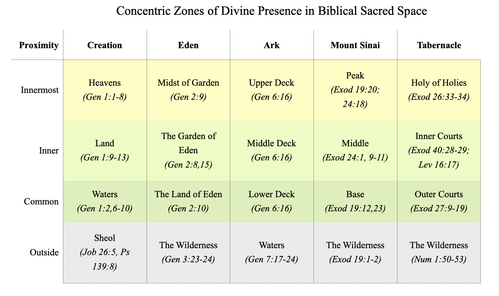
6. Concentric Zones of Divine Presence in Biblical Sacred Space
Genesis 4 isn’t a simple moral story - it’s meditation literature. The text is designed to be read slowly, revisited, and reflected on, revealing deeper layers over time. “Genesis 3 and 4 are mirror stories… the next generation is replaying and intensifying the failure of their parents.” — Tim Mackie (BibleProject)
2. Eve’s words at Cain’s birth may hint at human overreach
When Eve says, “I have gotten a man with the help of the LORD” (Gen 4:1), the Hebrew word qanah (“to acquire / create”) closely echoes Cain’s name (Qayin). Some scholars suggest Eve’s words carry the sense, “I have created a man” — subtly echoing God’s creative role and foreshadowing humanity’s ongoing struggle to grasp what belongs to God alone. — John Sailhamer
3. Cain’s name echoes forward through his descendants
Cain’s name is likely connected to metalworking, which becomes significant later when his descendant Tubal-Cain is introduced as the ancestor of bronze and iron workers (Gen 4:22). Cain’s identity doesn’t end with him — it shapes the trajectory of his family line.
4. Cain’s offering wasn’t rejected because it lacked blood
Both Cain and Abel bring legitimate offerings. In the Torah, grain offerings are valid expressions of thanksgiving (Lev 2). The text intentionally does not explain why God rejects Cain’s offering — shifting the focus away from the offering itself and onto Cain’s response. The real issue is not what Cain brings, but how he responds when God’s favour doesn’t go where he expects it to.
5. Cain is an insider — not a rebel
Cain worships. Cain obeys. Cain brings an offering. His problem isn’t unbelief — it’s entitlement. He obeys God to secure favour, not to know God.
This places Cain closer to the older brother in Jesus’ parable (Luke 15:11–32) than to a moral outsider. — Tim Keller (via Matt Smethurst)
6. Concentric Zones of Divine Presence in Biblical Sacred Space

2. The Croucher
GENESIS 4:6-7
"...sin is a croucher at the door..."
- Genesis 4:7
- Genesis 4:7
Sermon Summary
Discipleship Questions
Before you begin, share with the group what stood out to you from the passage.
Discover
Who is God? What has He done?
- Coming Soon!
INSIGHT: Coming Soon!
Nurture
Who Am I in Light of What He Has Done?
- Coming Soon!
- Coming Soon!
IDENTIFY: Coming Soon!
Act
What Should I Do in Light of This?
- Coming Soon!
ACTION: Coming Soon!
3. BLOOD CRIES OUT
GENESIS 4:8-12
"The voice of your brother’s blood is crying to me from the ground..."
- Genesis 4:10
- Genesis 4:10
Sermon Summary
Discipleship Questions
Before you begin, share with the group what stood out to you from the passage.
Discover
Who is God? What has He done?
- Coming Soon!
INSIGHT: Coming Soon!
Nurture
Who Am I in Light of What He Has Done?
- Coming Soon!
- Coming Soon!
IDENTIFY: Coming Soon!
Act
What Should I Do in Light of This?
- Coming Soon!
ACTION: Coming Soon!
Review
GENESIS 4:1-12
Sermon Summary
Discipleship Questions
Before you begin, share with the group what stood out to you from the passage.
Discover
Who is God? What has He done?
- Coming Soon!
INSIGHT: Coming Soon!
Nurture
Who Am I in Light of What He Has Done?
- Coming Soon!
- Coming Soon!
IDENTIFY: Coming Soon!
Act
What Should I Do in Light of This?
- Coming Soon!
ACTION: Coming Soon!
4. East of Eden
GENESIS 4:13-16
"Then Cain went away from the presence of the LORD and settled in the land of Nod, east of Eden..."
- Genesis 4:16
- Genesis 4:16
Sermon Summary
Discipleship Questions
Before you begin, share with the group what stood out to you from the passage.
Discover
Who is God? What has He done?
- Coming Soon!
INSIGHT: Coming Soon!
Nurture
Who Am I in Light of What He Has Done?
- Coming Soon!
- Coming Soon!
IDENTIFY: Coming Soon!
Act
What Should I Do in Light of This?
- Coming Soon!
ACTION: Coming Soon!
5. The City of Cain
GENESIS 4:17-24
"When he built a city, he called the name of the city after the name of his son, Enoch..."
- Genesis 4:17
- Genesis 4:17
Sermon Summary
Discipleship Questions
Before you begin, share with the group what stood out to you from the passage.
Discover
Who is God? What has He done?
- Coming Soon!
INSIGHT: Coming Soon!
Nurture
Who Am I in Light of What He Has Done?
- Coming Soon!
- Coming Soon!
IDENTIFY: Coming Soon!
Act
What Should I Do in Light of This?
- Coming Soon!
ACTION: Coming Soon!
1. Call Upon the Name of the LORD
GENESIS 4:24-25
"At that time people began to call upon the name of the LORD."
- Genesis 4:26
- Genesis 4:26
Sermon Summary
Discipleship Questions
Before you begin, share with the group what stood out to you from the passage.
Discover
Who is God? What has He done?
- Coming Soon!
INSIGHT: Coming Soon!
Nurture
Who Am I in Light of What He Has Done?
- Coming Soon!
- Coming Soon!
IDENTIFY: Coming Soon!
Act
What Should I Do in Light of This?
- Coming Soon!
ACTION: Coming Soon!
Review
GENESIS 4:13-25
Sermon Summary
Discipleship Questions
Before you begin, share with the group what stood out to you from the passage.
Discover
Who is God? What has He done?
- Coming Soon!
INSIGHT: Coming Soon!
Nurture
Who Am I in Light of What He Has Done?
- Coming Soon!
- Coming Soon!
IDENTIFY: Coming Soon!
Act
What Should I Do in Light of This?
- Coming Soon!
ACTION: Coming Soon!