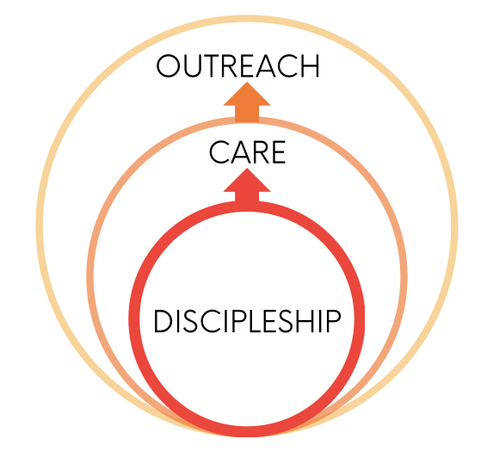
At the heart of caring for people is something simple, but deeply powerful:
connection.
As Dr Jonathan Andrews shows in his book,
The Reconnected Heart, connection doesn’t just make life better - it actually brings life. Disconnection, on the other hand, leads to decay. It affects our bodies, our minds, and our sense of self. People who are connected flourish; people who are isolated struggle. Connection is not just helpful - it’s essential to human life and wellbeing.
Scripture affirms this at every level. From the beginning,
“It is not good that the man should be alone” (Genesis 2:18). We were made for relationship - with God and with one another. Therefore, when we move toward people in love (or, when the
gospel is in motion), we are not doing something extra in discipleship - we are stepping into God’s design for discipleship and life itself. This is why Hebrews calls us to
“consider how to stir up one another to love and good works… encouraging one another” (Hebrews 10:24–25). Care is relational at its core.
But even more than that, this is the shape of the gospel. Jesus does not remain distant from us in our sin, suffering, or isolation - he comes near.
“The Word became flesh and dwelt among us” (John 1:14). He enters our world, sits with the broken, touches the unclean, and ultimately gives his life to bring us back into relationship with God. Therefore, when we care for others - when we show up, listen, stay present - we are reflecting the very heart of Christ. We are participating in his work of bringing people out of isolation and into life.
So, how do we care well?
We connect.Caring for one another is not about having the right answers or fixing every problem. It’s about being there. Staying connected. Reminding people, often without words,
“you are not alone.” And in that connection, God often begins to restore what has been lost - bringing healing, strength, and hope through the simple, powerful gift of presence.